As energy prices continue to rise across Australia, more homeowners and businesses are turning to solar power as a reliable and cost-effective solution. But have you ever wondered what actually happens when sunlight hits a solar panel? How does that light become the electricity that powers your lights, air conditioner, refrigerator, or business equipment?
At SSC Electricals, we believe that understanding your solar system helps you make smarter energy decisions. In this guide, we’ll explain in simple terms how solar panels convert sunlight into electricity and why they’re one of the best long-term investments for Australian homes and businesses.
What Are Solar Panels?
Solar panels are devices that capture sunlight and convert it into usable electricity. They are made up of multiple solar cells, which are usually manufactured using silicon—a semiconductor material capable of producing electricity when exposed to sunlight.
Each panel contains dozens of these cells working together to generate enough power for your property.
How Solar Panels Generate Electricity
1. Sunlight Hits the Solar Panels
Everything begins when the sun shines on your roof.
Solar panels absorb sunlight throughout the day. Even on cloudy days, panels can still generate electricity, although at a reduced level compared to bright sunshine.
Australia’s high sunshine levels make it one of the best countries in the world for solar energy production.
2. Solar Cells Produce Direct Current (DC)
Once sunlight reaches the silicon cells, electrons begin moving.
This movement creates Direct Current (DC) electricity.
However, your household appliances cannot use DC electricity directly.
3. The Inverter Converts DC into AC
This is where the inverter becomes one of the most important components of your solar system.
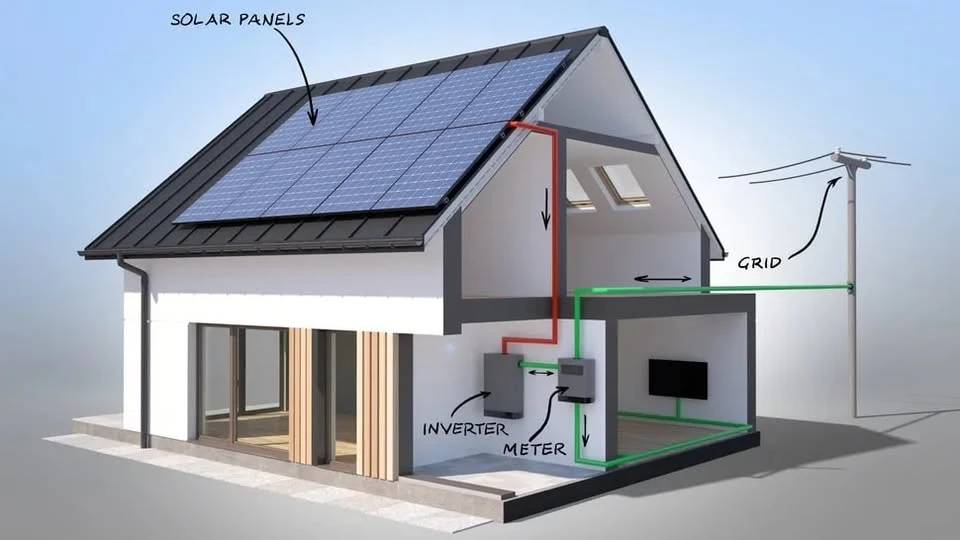
The inverter converts Direct Current (DC) into Alternating Current (AC).
AC electricity is the type used by Australian homes and businesses.
Without an inverter, your solar panels would not be able to power your property.
4. Electricity Powers Your Home
After conversion, the electricity flows through your property’s switchboard and begins powering appliances such as:
- Air conditioners
- Refrigerators
- Washing machines
- Televisions
- Computers
- Lighting
- Pool pumps
- Electric vehicle chargers
Your home always uses solar energy first before drawing electricity from the grid.
5. Extra Electricity Is Sent to the Grid
Sometimes your solar panels generate more electricity than you need.
Instead of wasting this energy, the excess power is exported back to the electricity grid.
Many Australian energy providers offer feed-in tariffs, meaning you receive credits on your electricity bill for the excess electricity you export.
6. Solar Batteries Store Excess Energy
If your system includes a battery, excess electricity doesn’t have to be sent straight to the grid.
Instead, the battery stores unused energy for later use.
This allows you to use your own solar electricity:
- During the evening
- At night
- During power outages (with compatible systems)
- During peak electricity pricing periods
Battery storage helps increase energy independence while reducing reliance on the grid.
What Happens on Cloudy Days?
A common misconception is that solar panels stop working when it’s cloudy.
In reality, solar panels continue generating electricity whenever daylight is available.
Production simply decreases because less sunlight reaches the panels.
Modern high-efficiency solar panels perform well under Australia’s varying weather conditions.
Each panel contains dozens of these cells working together to generate enough power for your property.
Why Solar Panels Work So Well in Australia
Australia enjoys some of the highest solar radiation levels in the world. This means homeowners can generate significant amounts of clean electricity throughout the year.
Benefits include:
- Lower electricity bills
- Reduced dependence on energy retailers
- Lower carbon emissions
- Increased property value
- Long-term financial savings
- Greater energy security
Factors That Affect Solar Panel Performance
Not every solar system produces the same amount of electricity. Several factors influence performance, including:
Roof Direction
North-facing roofs generally receive the most sunlight in Australia, although east- and west-facing systems can also perform well depending on your energy usage patterns.
Roof Angle
The angle of your roof affects how much sunlight your panels capture throughout the year.
Shading
Trees, chimneys, neighbouring buildings, and antennas can reduce system performance if they cast shadows on the panels.
Panel Quality
Premium solar panels generally offer higher efficiency, longer warranties, and better performance over time.
Inverter Quality
A high-quality inverter ensures efficient energy conversion and reliable system operation.
How Long Do Solar Panels Last?
Modern solar panels are built for durability. Most quality systems include:
- 25–30-year performance warranties
- 10–25-year product warranties
- Minimal maintenance requirements
Regular cleaning and occasional professional inspections help maintain optimal performance.
Why Choose SSC Electricals for Your Solar Installation?
Choosing the right installer is just as important as choosing the right solar equipment.
At SSC Electricals, we provide customised solar solutions designed to suit your energy needs, property, and budget.
Our services include:
- Residential solar installations
- Commercial solar systems
- Premium solar batteries
- High-quality inverters
- Professional installation
- Ongoing maintenance and support
- Honest advice with no hidden surprises
Whether you’re installing your first solar system or upgrading an existing one, our experienced team ensures a smooth and reliable process from consultation to installation.
Final Thoughts
Solar panels may seem like advanced technology, but the idea behind them is remarkably simple: they capture sunlight and transform it into clean, usable electricity for your home or business.
With Australia’s abundant sunshine, investing in solar is more than just an environmentally friendly choice—it’s a practical way to reduce electricity costs, improve energy independence, and add long-term value to your property.
At SSC Electricals, we’re committed to helping Australians make the switch to smarter, cleaner energy with quality products, expert installation, and trusted support every step of the way.
Ready to harness the power of the sun? Contact SSC Electricals today for a free consultation and discover how the right solar system can transform the way you power your home or business.